

The First-Time
Homebuyer Guide
All first-time buyers start somewhere. Why not start here?

Kansas first-time homebuyer? Start with programs built for you.
Let's get into it.

What records should you keep for pre-approval?

Employment History
- 24 months of employment history
- Last two years of W-2s and/or other acceptable documentation
Source of Funds
- Records of checking, savings, CD's, Money Market, and 401k accounts
- Two recent bank statements
Income
- All sources of income from the past month
- Includes, but is not limited to, income and child support
- Must be verifiable and reoccurring
Gift Funds
- Gift funds are allowed on all loans
- Loan officers can provide additional information as some programs have limitations and other requirements for gift funds
Debts
- Money owed in monthly installments
- Can include anything from educational loans and credit cards to individuals or entities who do not report to credit agencies
Pre-Qualification vs. Pre-Approval

Pre-Qualified
(This is for your benefit/budgeting)
Pre-qualified is the FIRST step. It basically gives you a starting point to know what price of home you can afford by supplying a general overall financial picture including debt, income, and assets. It does NOT include underwriting, but it DOES include an in-depth look at your documentation.
Pre-Approved
(This assures the seller you are prepared)
Pre-approval is the NEXT step. Pre-approval is based on official documentation: mortgage application, financial documents verified, and current credit rating underwriting review.
Tip
Refrain from purchasing items that involve having your credit checked during this process, like a car.
Pre-Approval Needs
A pre-qualification gives you a price range for your home search but a pre-approval enhances your offer by showing the seller that you are qualified to purchase the home. Your qualification is dependent on three things:

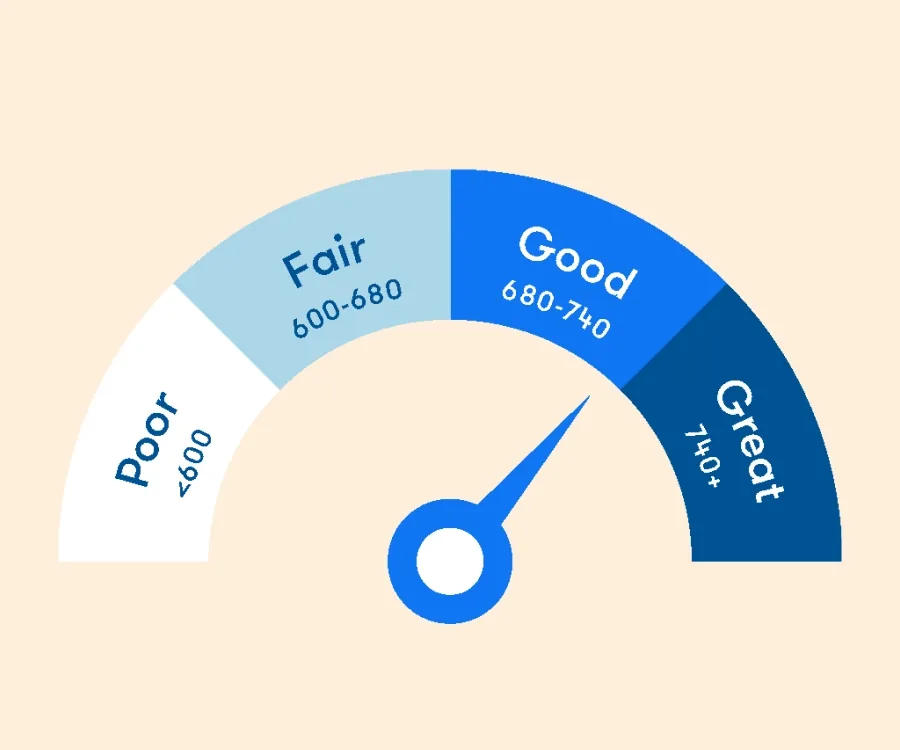
Credit (FICO®) Score

Debt-to-Income Ratio

Attaining Pre-Approval
What could be affecting your credit scores?
Payment History
- Public record and collection items
- Delinquency notes in trades lines section - severity, recency, and frequency
Outstanding Debt
- Number of balances recently reported
- Average balance across all trade lines
- Relationship between total balances and percentages of total credit limits used on revolving trade lines
Credit History
- Age and performance of each account listed on a credit report (aka, a trade line)
Inquiries & New Credit
- Number of inquiries and new account openings in the last year, noting the most recent account
Types of Credit Used
- Revolving: credit cards
- Installment: student loan, car loan
- Mortgage
- Collections, etc.
Questions to ask before selecting a mortgage program

- What types of mortgage options exist?
- For which mortgage options do I qualify?
- Does the mortgage I ve chosen meet my needs?
- Will I need a down payment?
- What kind of monthly payment can I afford?
- Do I have any credit issues?
What are my mortgage options?

FHA
Federally insured loans, very common, 3.5% down, no income restrictions

VA
VA guaranteed loans for veterans only, 0% down, no income restrictions

Conventional
Privately insured loans, very common, no income restrictions

First-Time Homebuyer Program
3% down in select areas, some income restrictions, lower monthly mortgage insurance costs
Understanding the Loan Estimate
Now that you're pre-approved, it will be beneficial to understand the terms used when selecting a loan program.
The Loan Estimate
Shows you your monthly payment and a detailed account of your closing costs and pre-paid items. Use the Loan Estimate to determine which loan fits your situation.
Annual Percentage Rate (APR)
The cost of your mortgage loan as a yearly rate. May be higher than the mortgage rate stated in your mortgage or deed of trust note since it includes various costs (fees, etc.).
Source of Funds
Funds will be needed for the down payment, closing costs, and prepaid items. Your real estate agent will be able to help with an itemized breakdown of these costs.
Points
Points, often called discount points, are prepaid interest at closing that permanently buy down the interest rate of your loan. Most loans are priced at "par," where borrowers do not pay points.
The broader the difference between the APR and the note rate, the more you should question excessive costs.
What is Mortgage Insurance and when is it needed?
Mortgage insurance reduces the risk for lenders and allows them to offer loans to borrowers who might not otherwise qualify for a mortgage due to a low down payment.
VA Funding Fee
A VA funding fee that is paid to the Veterans Administration on all VA loans, with the exception of disabled veterans, when the VA sends a waiver.
Reservists, or those who serve in the National Guard, may also be eligible for a VA-guaranteed home loan. The first-time user funding fee is 2.4% on 1–% LTV's and 3.30% if previously used. The fee may still be financed in the loan or note.
Mortgage Insurance Premium (MIP) FHA
MIP is paid to HUD on all FHA loans regardless of the loan-to-value ratio (LTV).
In addition to a UPFRONT mortgage insurance premium (UF-MIP), there is a MONTHLY payment, along with real estate taxes, hazard insurance, and PI.
The UF-MIP will be added to the BASE mortgage amount and financed. The annual premium is calculated on the unpaid base principal balance without the UF-MIP added to the base loan.
Tip
Keep an eye out for different terminology. Mortgage insurance is also referred to as a Funding Fee on VA loans, MIP on FHA loans, and MI on PMI on conventional loans.
Searching for a Home
Hey, you've made it to the fun part. Here are a few nice-to-knows while you hunt for your future home:

The Buyer's Agent
When choosing whether to work with a realtor, it is important to understand the legal obligations within the relationship. Your exclusive buyer's agency agreement is a legally binding contract that provides both parties clear expectations and benefits throughout the home-buying process.
Buyer's agent's legal obligation to the buyer
- Obtain acceptable price
- Suggest negotiating strategy
- Disclose all pertinent information
- Keep buyer's information confidential. Disclose if seller cannot uphold the contract (same obligation for the buyer as well).
Home Search: Multiple Listing Service (MLS)
The MLS is an inventory of houses for sale that buyers have access to through their realtor. People use it to get info about comparable sales (aka, comps) in an area. This helps realtors determine value.
Making an Offer on a Home
A purchase offer (aka sales contract) is legally binding, so you'll want to make sure all parties agree, and all information is accurate, before signing. This contract typically includes:

Names
Buyer's and seller's legal names
Address
Postal address of property and legal description to government
Sales Price
The amount offered to seller for purchase of the property
Earnest Money
$500 - $1,000 is common as representation of your intent to purchase
Title Company Name
As the holder of the earnest money
Closing & Possession Dates
Uses the terminology "on or before"
Negotiating
Counter offers are common when negotiating, and buyers should rely on their realtor's professional negotiating skills for this purpose. It is important to try to remain objective and rational during the process. Once all parties sign the contract, all terms and conditions are legally binding.
The Final Steps

Loan Underwriting
A loan underwriter audits the complete loan package, ensuring compliance with investor requirements and automated conditions for purchase in the secondary market.
The Final Walk-through
The final walk-through of the home, arranged through the buyer's agent, is completed to confirm that the property's condition has not changed, any other agreements that have been made, and the terms of the contract will be met.
Loan Closing
The seller(s) normally will go to the Title/Escrow company prior to the closing date to sign the warranty deed, along with other documents. You will also go to the Title/Escrow company to sign documents.
Why choose nbkc as a first-time homebuyer?
Starting the homebuying journey can be a daunting task — but you're not alone with nbkc.

- With nbkc bank, you could save up to $9,147 over the typical life of your loan.*
- We're upfront and honest about fees and costs.
- We do all of our processing in-house to make the process super smooth.
- Our online applications are easy to fill out and save you valuable house-hunting time.
- If we don't close the loan on time, we pay the seller and buyer $2,500.00 each.
- You'll get real help from a real person every step of the way.
Home Loan Calculator
Home Loan Calculator
Try our free online mortgage rate calculator.
Home Loan Calculator
Try our free online mortgage rate calculator.
Getting your rates...
Unable to retrieve rates. Please try again.
Your Mortgage Estimate
The interest rates shown below are based on your credit history, property type and loan amount on a 45 day lock period. The actual interest rates and fees available to you may vary and may differ from the rates displayed.
Loan rates (APRs) are effective on date of publication and may be subject to change. Actual loan rate (APR) may be higher than listed rate based on credit qualifications of applicant(s). Please contact us for details. Member FDIC. Equal Housing Lender. NMLS# 409631.
*The estimated savings statement is calculated over a 5-year period utilizing interest savings. Home purchase in the state of Missouri with a Loan-To-Value of 80%, Loan amount = $400,000, Single Family, Primary Residence, FICO=780, Term=30-year conventional loan as of 10/8/2025. Average level savings of $9,147 as compared to an average of national mortgage lenders in a comparative study conducted by Curinos.com. Individual savings may vary based on credit score, Loan-To-Value, location and how long the loan remains active. This is subject to loan requirements, underwriting and approval.